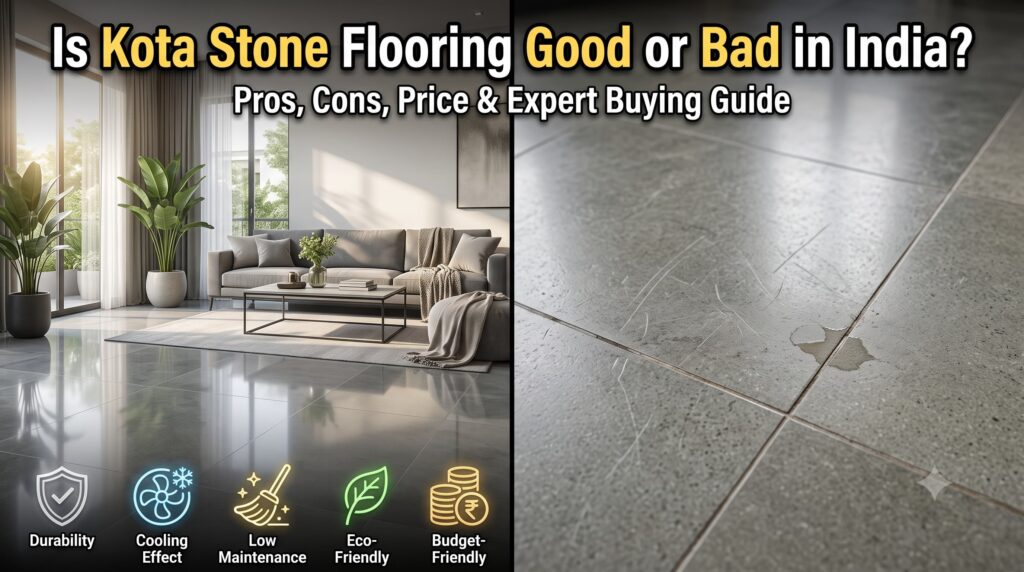
Is Kota Stone Flooring Good or Bad in India? Pros, Cons & Expert Buying Guide (2026)
Meta Title: Is Kota Stone Flooring Good or Bad in India? Pros & Cons Guide (2026)
Meta Description: Wondering if Kota stone flooring is good or bad in India? Discover its advantages, disadvantages, price, maintenance, durability, and whether it’s the right flooring choice for your home.
Is Kota Stone Flooring Good or Bad in India?
If you’re planning to build a new home or renovate your existing one, you’ve probably wondered “Is Kota stone flooring good or bad in India?”
The short answer is Yes—Kota stone is one of the best natural flooring materials for Indian homes, especially if you’re looking for durability, affordability, and long-term value. However, like every flooring material, it also has a few limitations that you should know before making a decision.
In this detailed guide, we’ll explain everything about Kota stone flooring, including its advantages, disadvantages, maintenance, pricing, and whether it is the right choice for your home.
What is Kota Stone?
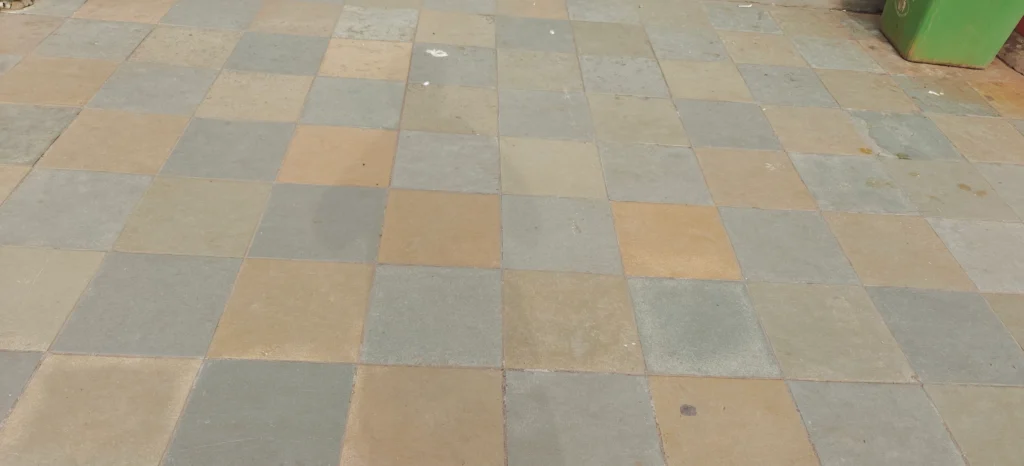
Kota Stone is a fine-grained natural limestone quarried mainly in Ramganj Mandi, Kota district, Rajasthan. It has been widely used in India for decades in:
- Residential homes
- Villas
- Schools
- Hospitals
- Government buildings
- Railway stations
- Shopping complexes
- Factories
Its natural strength, cooling properties, and economical price make it one of India’s most preferred flooring stones.
Is Kota Stone Flooring Good in India?
Yes. Kota stone performs exceptionally well in Indian climatic conditions because it:
- Stays naturally cool during hot summers
- Handles heavy foot traffic
- Lasts for decades
- Requires minimal maintenance
- Offers excellent value for money
This is why architects and builders continue to recommend Kota stone for both residential and commercial projects across India.
Advantages of Kota Stone Flooring
1. Extremely Durable
Kota stone is known for its exceptional strength.
With proper installation, it can easily last 30–50 years or more, making it a long-term investment rather than a recurring expense.
2. Budget-Friendly Flooring
Compared to marble, granite, or imported tiles, Kota stone offers outstanding value.
It delivers a premium natural stone appearance without the high cost, making it ideal for both small and large construction projects.
3. Naturally Cool in Summer
One of the biggest reasons Indians prefer Kota stone is its natural cooling effect.
Unlike ceramic tiles that may become warm, Kota stone remains comfortable underfoot even during peak summer.
4. Low Maintenance
Daily cleaning requires only:
- Water
- Mild floor cleaner
- Soft mop
Occasional polishing restores its original appearance and extends its life.
5. Slip-Resistant Surface
Leather, honed, or natural-finish Kota stone provides excellent grip, making it suitable for:
- Outdoor flooring
- Walkways
- Verandas
- Parking areas
- Commercial buildings
Mirror-polished surfaces may become slippery when wet, so the finish should be selected according to the application.
6. Eco-Friendly Natural Stone
Kota stone is a naturally quarried product.
Unlike synthetic flooring materials, it requires minimal processing, making it an environmentally responsible choice.
7. Available in Multiple Finishes
Today’s Kota stone is available in various finishes, including:
- Natural Finish
- Mirror Polish
- Leather Finish
- Honed Finish
- Brushed Finish
- Antique Finish
This makes it suitable for both traditional and modern interiors.
Disadvantages of Kota Stone Flooring
Although Kota stone has many advantages, it also has some limitations.
1. Limited Colour Options
Unlike vitrified tiles or marble, Kota stone is available in fewer natural shades, mainly:
- Grey
- Blue-Grey
- Brown
- Greenish Grey
2. Sensitive to Strong Acids
Harsh acidic cleaners can damage the stone’s surface over time.
Always use pH-neutral cleaning products for routine maintenance.
3. Professional Installation Required
Improper installation may lead to:
- Uneven flooring
- Hollow sounds
- Hairline cracks
Hiring an experienced stone installer is highly recommended.
4. May Need Re-Polishing
After many years of heavy use, the surface may lose some shine.
Fortunately, Kota stone can be polished again to restore its appearance.
Kota Stone vs Tiles
| Feature | Kota Stone | Vitrified Tiles |
|---|---|---|
| Lifespan | 30–50+ Years | 10–20 Years |
| Natural Material | ✅ Yes | ❌ No |
| Cooling Effect | Excellent | Moderate |
| Repairability | Easy to Polish | Difficult |
| Cost | Economical | Medium to High |
| Eco-Friendly | Yes | Limited |
Where is Kota Stone Best Used?
Kota stone is ideal for:
- Living rooms
- Bedrooms
- Kitchens
- Corridors
- Staircases
- Verandas
- Parking areas
- Garden pathways
- Schools
- Hospitals
- Commercial buildings
Is Kota Stone Good for Modern Homes?
Absolutely.
With mirror-polished and leather-finished options, Kota stone complements:
- Minimalist interiors
- Luxury villas
- Farmhouses
- Contemporary architecture
- Industrial-style homes
Many modern architects now prefer natural stone flooring because of its timeless appearance and durability. Traditional Indian flooring materials like Kota stone are also seeing renewed popularity in modern residential design.
How Much Does Kota Stone Flooring Cost?
The cost depends on:
- Size
- Thickness
- Finish
- Grade
- Quantity
- Delivery location
Generally, Kota stone remains one of the most affordable natural flooring materials available in India.
Is Kota Stone Flooring Good or Bad?
It is GOOD if you want:
- Long-lasting flooring
- Affordable natural stone
- Low maintenance
- Cool flooring for Indian weather
- Timeless appearance
- Excellent durability
It may not be ideal if you want:
- Bright white luxury flooring
- Many colour choices
- High-gloss marble-like appearance
- Acid-resistant flooring
Final Verdict
Kota stone flooring is one of the best flooring options available in India.
Its combination of durability, affordability, natural beauty, cooling properties, and low maintenance makes it suitable for homes, commercial buildings, and institutional projects. While it has a few minor drawbacks, they are easily manageable with proper installation and regular care.
If you want a flooring solution that lasts for decades and delivers excellent value for money, Kota stone remains one of the smartest investments for Indian construction projects.
Frequently Asked Questions (FAQs)
Is Kota stone flooring better than vitrified tiles?
Yes. Kota stone generally lasts much longer, remains cooler in summer, and can be repolished multiple times.
Is Kota stone slippery?
Natural, leather, and honed finishes provide good grip. Mirror-polished Kota stone may become slippery when wet.
How long does Kota stone flooring last?
With proper installation and maintenance, it can last 30–50 years or even longer.
Is Kota stone expensive?
No. It is one of the most affordable natural stones available for flooring in India.
Is Kota stone suitable for outdoor use?
Yes. It is widely used for patios, gardens, pathways, parking areas, and terraces because of its strength and weather resistance.